Tuesday, 28 April 2026

Pitsford Water bug Course


I held another water Bugs identification course last week for the Wildlife BCN Training Workshops programme trying to lift it up a level from keys and use some identification guides and boxes of samples i have put together. 


We had a great trip to Christies Copse with lots of bugs and other inverts on show. We recorded Gerris argentatus which seems to be having a good year as i am finding it regularly at the moment but surprisingly this was the first record for Pitsford. 


Wednesday, 26 July 2023

Pitsford Bee Hotel

During my lunchtime today i stood out looking at the new Bee Hotel that has been created and it was looking fantastic. How simple but effective it is, made out of a few stacked up pallets and then filled with natural materials, leaves, cones, bamboo, bricks with holes, plant stems and Wood blocks with holes drilled in them. Surrounded by Bee favoured plants makes it a great habitat. It was only created a week and it was starting to be used and continued to be.  


Today with only a little sun out it was buzzing with invertebrates. The mining bees were in and out of the holes which was great and sharing with a Potter Wasp . They take a prey item in, lay their egg on it and then close up and do the same again so they fill the hole as you can see with some of the holes below. When the egg hatches it will then have food and pupate so they can all then exit at a similar time - very clever. You can see that there are some holes that have been sealed up already and a good sign for next year.


The Plants around were also in flower and attracting lots of of other insects too. There was a Common Carder Bee. Also Buff-tailed, Red-tailed and White tailed Bumble Bees gathering nectar and pollinating the flowers.


Common wasps and Median wasps were chewing the wood around the edges. They mushing it up into a pulp and then use it in building their paper nests.


There were lots of Butterflies too taking advantage of the nectar on the Buddleja around it including Red Admirals, Peacocks, Large White, Small White, Green-veined White, Brimstone, Meadow Browns and Gatekeepers.


All in all it is now a great invertebrate habitat that is really showing off!


Tuesday, 18 July 2023

New Role

I started my new role today as Projects Officer for the Wildlife Trust BCN and what a colourful beginning. 

I met the wider reserve team and we did a Grassland survey at the Collyweston Grassland Reserve and it was really out in flower. When we arrived the sun was out and the area was positively humming with invertebrates. 


Wednesday, 12 July 2023

Turtles laying eggs

We have been out to Cape Verde for a week and couldn’t help immersing myself in turtles.


Firstly we went on a beach tour to see if we could see any come ashore to lay eggs and didn’t we just.


We got a Birds Eye view as she had dug her nest and then went into a trans to lay around 80 eggs. Viewing was only from behind so there was no disturbance and by Infra-red with us all dressed in back.


The scientists were taking down all the particulars for records and this one was relatively small at 79cm. Perhaps a younger female who start laying at around 25 years old. Can you believe that only one in 1000 of these eggs make it to adulthood.


It was an emotional event watching her lay for around 40 minutes and everything that means.


Secondly I was out snorkling on the reef and managed to swim with a few youngsters as they were feeding on sea grass. What an experience of a lifetime, both of which I’ll never forget.

Saturday, 24 June 2023

Water Stick Insect In Scotland

This week i have been on a Colsec field meeting to Wigtownshire and what a lovely place it is. A back drop of hills, open fields, lots of bays and miles of coastline. RSPB Crook of Baldoon was superb, although this cow was keeping an eye on me.


That was looking out to see but looking inward they have built a whole wetland area of scrapes, lakes and ditches tp protect nesting wading birds and it was great to see lapwings, egrets and redshank already making it home.


Also making it home was a Ranatra linearis (Water Stick insect). This is a first record for Scotland only having been known as far North as Carlisle before. It was great that it was just a juvenile and there will be more of them about and breeding next year. 


It is a weak flyer that is very gangly and seems to put a lot of energy in to get not very far which may have impeded its spread across the UK but it is going for it now and i am sure it will find plenty of suitable habitat as it continues. 


Monday, 31 October 2022

Pitsford New Ponds

The Freshwater Habitats Trust have a project to install around 10 new ponds/water features at Pitsford at three locations to increase the freshwater diversity. They have been dug recently and i have been walking round to see how they are coming along. 


The prime site is in “No Mans Land” as we call it, the popular plantation at the bottom of the Scaldwell arm. They are opening up the old meanders in the stream so that they fill when the stream is running high and the water can then create ponds that are longer lasting. This should also alleviate recent flooding in the area especially on the path by slowing the flow.


At the moment these just have a sprinkling of autumn leaves and no water as it has been a very dry summer and autumn.  Also the set of ponds at the back of compartment 23 in the Scaldwell arm were still dry.


However the complex at Cristie’s Copse have a few puddles of muddy dirty water perhaps from the storms over the last week and it is amazing how quickly they get populated. 


The water bugs tend to be one of the earliest colonisers as they are strong fliers. I found 4 species of Corixidae (Corixa panzeri, Sigara nigrolineata, Sigara fossarum and Sigara lateralis) and 2 species of backswimmers including Notonecta glauca and also Notonecta obliqua which is a first sighting for Pitsford. It is usually a bit more Northern preferring peat ponds and acid bog pools. However more recently and frequently it is found in more base rich sites such as Clay ponds.


Water beetles fly too and also have there habitat preferences and i found 4 species. Helophorus brevipalpis likes any temporary wetland habitat, Berosus affinis likes freshwater over clay with some exposed substratum and Hygrotus confluens likes newly created and highly disturbed ponds with no vegetation. These are typical of the first colonisers in newly created ponds.


Also i was surprised to find a female Great Diving Beetle - Dytiscus marginalis. Although these like small ponds and are found in most aquatic habitats. I think it was the size again that surprised me and at c30mm with big jaws they are an awesome predator. 


The ponds have started well and are looking great. It will take a while for them to clear as the rain will disturb the substrate but next year you should be able to stand and look in, observing how much life there is. 


Friday, 28 August 2020

Willow Emerald

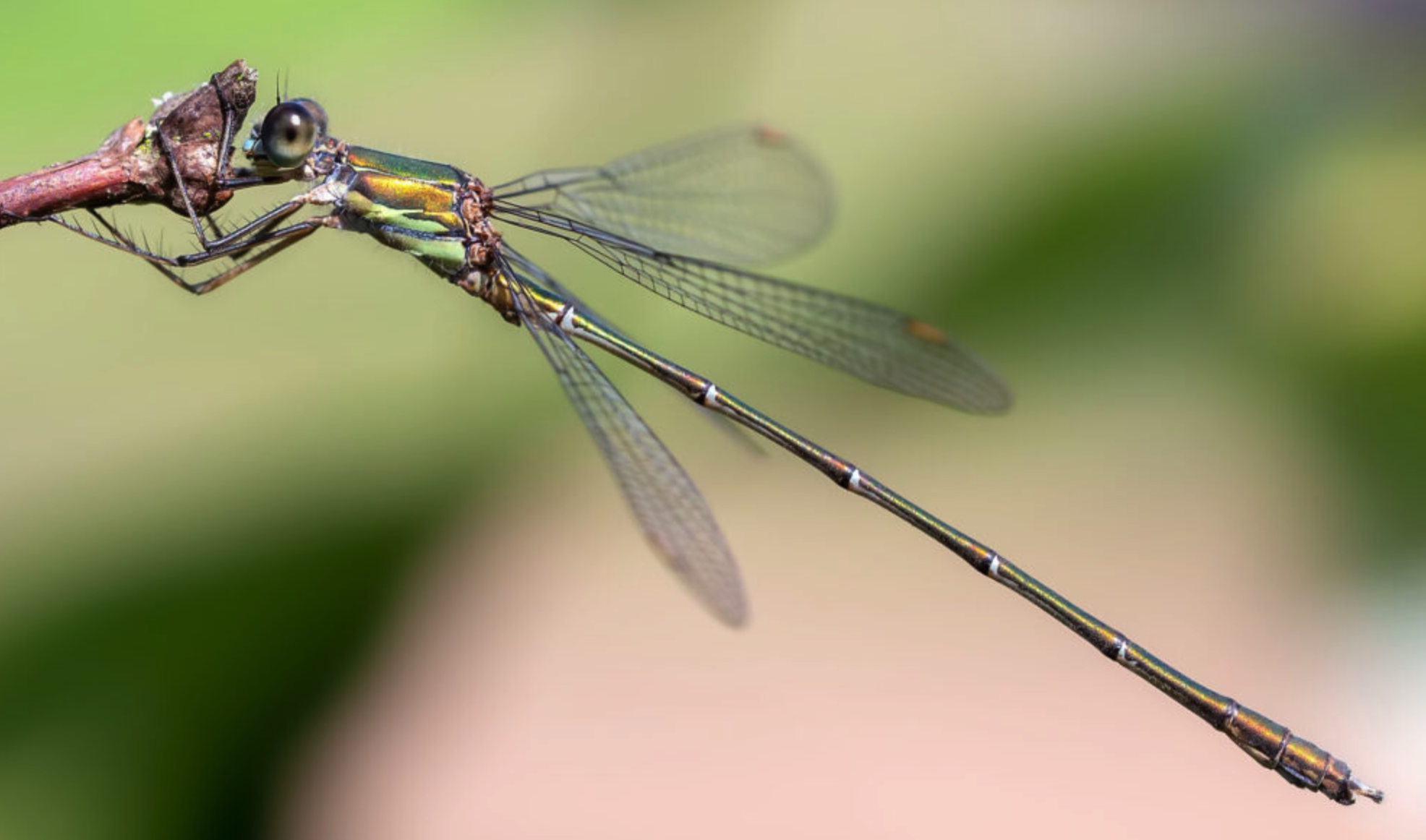
Today i managed to see my first Willow Emerald at Yardley Chase and very charasmatic it was too. Last week there was one captured but it managed to escape just as the pot was opened to photograph it and yesterday there was some small signs of the egg/larvae scarring in willow. However today i followed jeff to the pond for a concerted look.
Image from Dragonfly Society - I will lod up jeff's when he sends through. I had looked for them a few times but was not convinced and today seemed to be similar. I managed to see a few Emerald's but there didnt seem to be anything different. And then one seemed to be just a little larger, no blue on the abdomen and it's pale Pterostigma stood out. As i looked closer there was a green line on the thorax. It was definitely a Willow Emperor. It was too far away to take a photo so i netted it and left that part to Jeff.
I then looked at the willow stems and found the evidence of eggs and larvae on just about all of the willow stems which is a great sign that it is breeding but in good numbers. The sun came out and i got my eye in and it was great to see a few more too. A very pretty damselfly that can so easily be overlooked

Saturday, 9 May 2020

Lockdown

Having been locked down avoiding Coronovirus for 6 weeks i have been avoiding recording wildlife. One of the great enjoyments for me are the fantastic habitats and environments that wildlife flourishes. Unfortunately my garden doesn't count as one of them so my interest has been on hold for a short while. However today i took a walk to Harlestone to see if the wild garlic (Allium ursine) was out and it didn't disappoint.
That fantastic smell, i know it is not for everyone but is brilliant in the woodland setting and the dainty white flowers against the plain green leaves is just so pretty.
There is a notable hoverfly called Portevinia maculata whose larvae feed on the bulbs of the plant during the winter with the adults making a brief appearance from Mid May to early June co-inciding with the flowering period. The adults sun themselves in the dappled light on the leaves and flowers with their wings out in a delta shape. They fly quite close to the ground in and out of the plants and can easily be overlooked.

Sunday, 19 May 2019

Skippers

A lovely sunny morning today started to bring out a few more butterflies as i wandered round the gullet at Priors hall near Corby. First up were the Common Blues, Small heath and some brilliant Grizzled Skippers.
As it warmed up there we more on the wing and we saw this Green letter hairstreak. They are fantastic and charismatic.
Then finally we picked out the Dingy Skippers as well as Green Tiger Beetles running, jumping and flying as we walked down the track.
Unfortunately there were not too many Hoverflies but a great morning anyway.

Wednesday, 19 September 2018

Loggerhead turtles

While on holiday in Santa Maria, Cape Verde - just between the hotel and the beach we stumbled on a Turtle hatchery.
They walk the beaches of the islands at night and remove any eggs that might be in danger and relocate them here.
They bury them here and then monitor it every night with a band of volunteers to deter any predators which mainly stray dogs. As they hatch they collect them up and relocate them to a safer beach and release.
They also then open up the nests the day after they hatch and help any stragglers but also collect data on the numbers that hatch and don’t. We managed to witness this which was amazing and while there were a few written eggs and a few that didn’t make there were also those that were rescued and would be released with the others.
What a brilliant experience.

Saturday, 28 July 2018

UK Bioblitz

Graham and i took part in Chris Packham's UK bioblitz today at Papley Grove farm, Eltisley in Cambs. Kept away from the camera's as much as i could but was impressed how he is trying to make a difference for wildlife and support and promote areas and organisations that don't have a big voice. The only bug of note was Aquarius paludum - a massive pond skater that was on both of the woodlands ponds. A really good record and no many having been recorded in Cambs before.

Friday, 28 July 2017

Summer Butterflies

A few days off work and i was hoping for sunshine and a some Summer Butterflies. Out with Phil, the weather wasn't great but we still managed 15 species and completed my last WCBS survey square for July. At Tottenham the Chalkhill Blues were out in force with many mating.
A Bucknell Wood this morning it was great to see a some wood whites sill on the wing in the rides. The colder weather meant that they were not flying all the time so when spotted we managed to get some good photo's as they settled.
I was surprised how many Red Admiral's we saw. I have also seen really good numbers this year. They conditions must be suiting then and having a really good year, the look really striking when they are fresh.

Sunday, 19 February 2017

WT Ecology groups conference

Was luck enough today to present some of the results from our Aquatic Invertebrates project for the BCN wildlife trust.
We are starting to generate some really good data now to help the reserve management and it was great to demonstrate that.
It was a great event well attended and met up with a number of people we hadn't seen for a while. The presentations were extremely interesting and was a a show of the diversity of monitoring from Butterflies, reserves, Birds, Dormice to aquatic insects.

Sunday, 11 September 2016

Whipsnade Zoo

We were invited by the Beds Natural History society to survey at Whipsnade zoo and see what local species we could find. It was a strange place that felt a bit like Jurassic Park as we walked through fields of wallabies, Chinese water deer, Emu's etc. Fortunately the Elephants had been moved to another field as we surveyed Elephant pond.
These two were backing the path, puffing up their feathers and grunting so i cautiously went round them.
Fortunately this one was still in it's cage as i swished a few flies from around her.

Friday, 22 July 2016

Chalkhill Blue

Had a great few days with Mike and Phil checking out butterflies. Now the sun is shining and warmed up massively it has bought out some great butterflies. The highlight for me was the Chalkhill Blues we found at Tottonhoe Knolls today. I don't know if it is my colour blindness but it took me ages to keep finding this Little Heath to photograph in the grass.